
.png)
International mobility can open many doors, as Katarzyna Pailler can testify. Discover her journey!
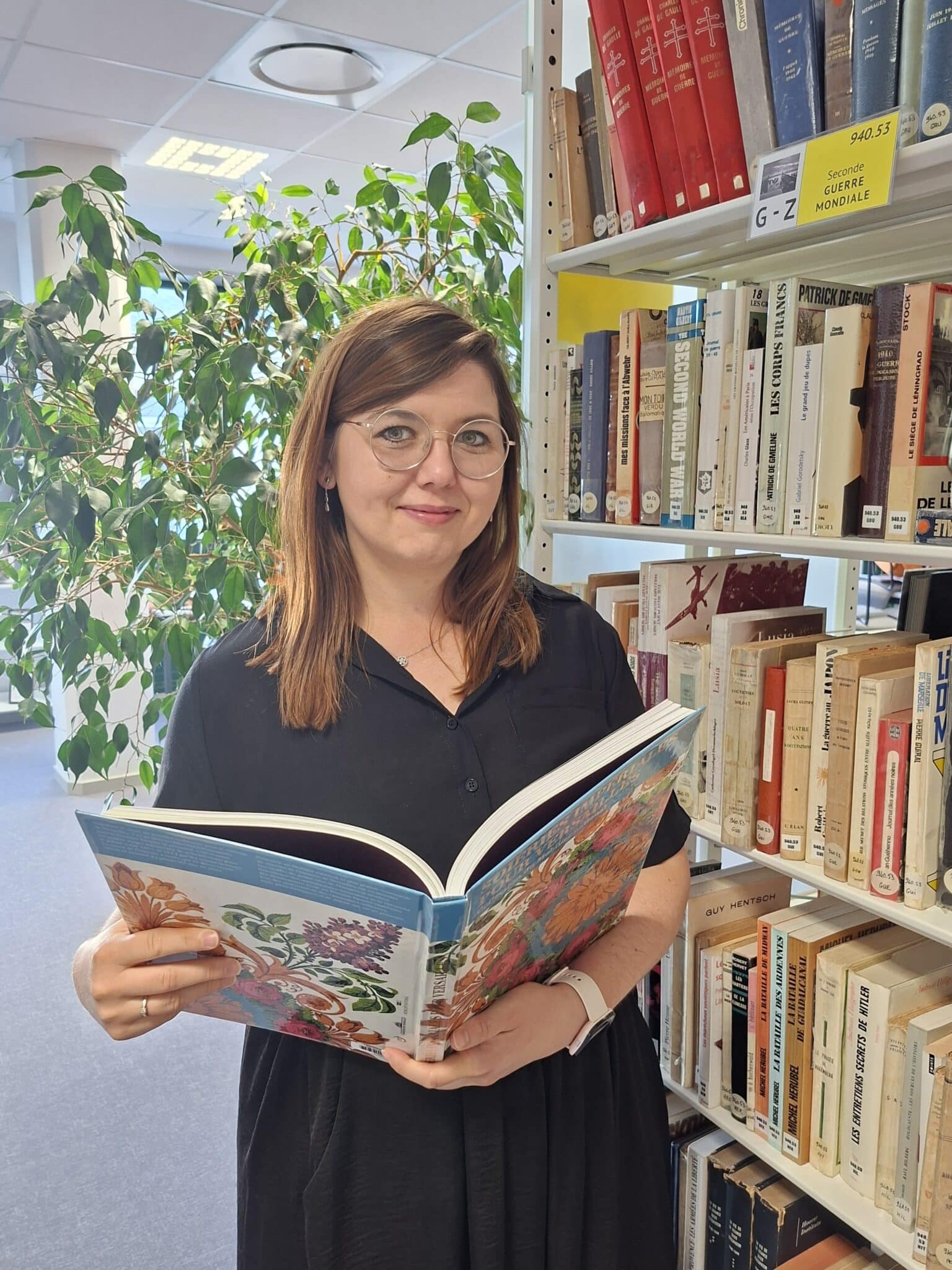
Mrs Katarzyna Pailler, librarian at ICES' university library
INTERVIEW TRANSCRIPT
My name is Katarzyna Pailler. I am originally from Poland and currently work as a librarian at ICES University Library.
I studied Romance Languages and Literature, a field focusing on Romance languages. I chose to specialise in French and Spanish. The programme covered not only the languages themselves, but also their history, literature and cultural backgrounds.
I completed my Bachelor's degree at Maria Curie-Skłodowska University in Lublin, followed by a Master's degree at the John Paul II Catholic University of Lublin.
My first experience in France came during the second year of my Master's degree, when I spent a semester on an exchange programme at the University of Haute-Alsace in Mulhouse. I then returned to Poland to complete my studies and defend my Master's thesis.
At the time, the Erasmus+ programme allowed students to undertake a traineeship abroad within twelve months of graduating. Since my first experience in France had been so positive, I was keen to continue my journey in this beautiful country.
When I first started university, my ambition was to become a French and Spanish teacher in Poland. However, as my studies progressed, I gradually became more interested in the business world and international career opportunities.
I therefore saw this traineeship as an opportunity to take my first steps into professional life and gain some initial international work experience.
The John Paul II Catholic University of Lublin provided me with a list of contacts, through which I discovered ICES. The university library had previously hosted trainees from my home institution, which made it a particularly interesting opportunity.
I received a reply shortly after submitting my application, which played a major part in my decision to choose ICES.
Everything had been very well organised ahead of my arrival, both in terms of practical arrangements and helping me settle in. When I arrived in early September, I was welcomed by the International Relations Office.
One particularly pleasant surprise was discovering that students from ICES had come to pick me up at the train station! They quickly introduced me to other international students, who had arrived a few days earlier. Thanks to this thoughtful welcome, I felt supported from the very beginning and was able to find my feet quickly.
The University of Haute-Alsace is a large institution, whereas ICES has a more close-knit, community-oriented feel. This smaller scale made it easier for me to build connections with French students as well.
I also noticed some differences in working habits between France and Poland. In Poland, the working day generally starts earlier and finishes at around 4 p.m., with no real lunch break. In France, I discovered that lunch breaks are practically an institution in their own right!
I also noticed that Polish people tend to be more direct in the way they communicate, whereas French people are often more diplomatic.
And, of course, eating habits are different too. In Poland, breakfast tends to be salty. I therefore thoroughly enjoyed discovering the delights of a traditional French breakfast, especially croissants, which I quickly grew accustomed to!
When I was little, my father loved French films. I already had an image of France as a sophisticated and elegant country. In fact, in Poland, we often use the expression « Francja-elegancja » (literally, "France-elegance") to refer to French-style refinement and sophistication.
I did not start learning French until secondary school, but it had already been a childhood dream of mine. I loved the sound of the language and was very drawn to French culture and its way of life.
After leaving Alsace, I already knew that I would return to France to live. Since moving to the Vendée region, my love for France has only grown stronger. I find French people very friendly, cheerful and welcoming. It is a wonderful country to live in, especially in the Vendée, with the coast so close by!
From the very beginning of my traineeship at the university library, I felt that I really clicked with the team. I absolutely loved working in a university environment, as it was important to me to be able to contribute to young people's education.
ICES also offers students wonderful opportunities to attend a wide range of conferences, academic symposiums and research events. These experiences, which encourage intellectual curiosity and broaden one's horizons, particularly appealed to me.
I had always loved books, but it was really during this experience that I discovered my true vocation. I realised that I could be part of something bigger, something that genuinely gave meaning to my work.
To pursue my career in university libraries, I went back to studying three years ago and obtained a professional qualification in Library and Information Services Management (Cadre opérationnel des bibliothèques et de la documentation) from the École nationale supérieure des sciences de l'information et des bibliothèques (ENSSIB), France's leading national school for library and information science.
The programme combined online learning with face-to-face sessions, including four study periods at ENSSIB and a work placement. This allowed me to explore other aspects of the profession and develop a more comprehensive understanding of how libraries operate.
I work as a librarian at ICES University Library. The library holds approximately 120,000 books spread across four floors, covering a wide range of academic disciplines. I am part of a five-person team.
My main responsibility is to coordinate the interlibrary loan service and liaise with the French Higher Education Bibliographic Agency (ABES). This includes ensuring the accuracy and consistency of records in the SUDOC collective catalogue, the national database of academic library collections in France.
I am also involved in managing and promoting the library's collections, as well as welcoming and supporting students. These are responsibilities shared by the whole team.
Don't hesitate to come if you want to practise your French rather than just speak English! That's one of the real advantages of studying at a smaller university: it is much easier to interact with French students, and the support you receive is excellent.
In La Roche-sur-Yon, the city's manageable size also makes it easier to build relationships with local shopkeepers and administrative services.
And let's not forget the Vendée: it is a particularly attractive region, with the coast just a short distance away!